Insights from Dennis Baver, P.E., CEM, LEED® AP, Senior Mechanical Engineer at AED Energy Services
HVAC systems often go unnoticed when they are working properly. A building feels comfortable, equipment operates as expected, and the people inside can focus on their work.
When those systems are not designed around the needs of the facility, however, the effects become difficult to ignore. Comfort issues, rising energy costs, maintenance challenges, and unreliable equipment can all interfere with how a building operates.
According to Dennis Baver, successful HVAC design begins with a simple but important question: How will this building actually be used?
Understand the Building Before Designing the System
Heating and cooling loads are an important part of HVAC design, but calculations alone do not tell the full story.
Engineers must understand who uses the building, what happens inside it, when its systems operate, and what conditions must be maintained. Schools, laboratories, healthcare facilities, offices, and manufacturing environments all have different needs.
In specialized facilities, HVAC systems may do more than control the indoor temperature and keep people comfortable. They can help control humidity, air quality, and space pressure relationships. These conditions may directly affect the work taking place inside the building and are often more critical than the space temperature.
That is why Dennis believes good engineering starts with listening. Understanding the client’s priorities and operational needs gives the design team a stronger foundation for selecting equipment, developing controls, and planning how the overall system should operate.
Look at the Entire System
One of the most important principles in HVAC design is that individual pieces of equipment do not operate independently; they operate as part of a system.
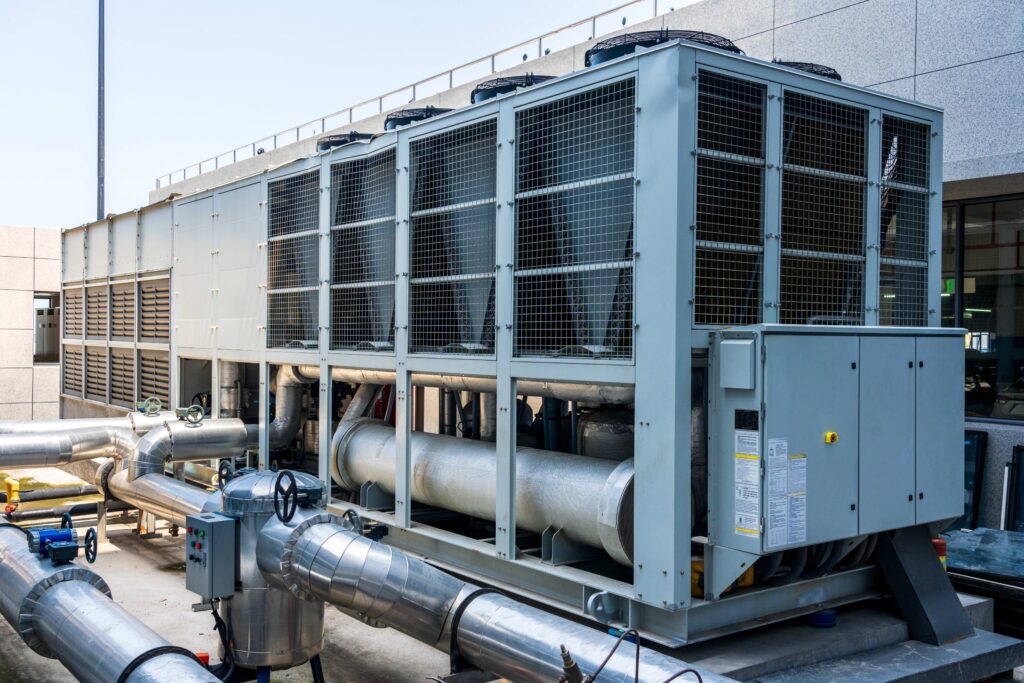
For example, a chiller should not be selected solely for its highest efficiency at peak cooling load. Its performance at minimum-load and part-load conditions should also be evaluated. Chiller performance depends on the operation of the chilled water distribution system, including pumps, piping, valves, and controls. Supply and return chilled water temperatures and the ambient conditions where the condenser operates also affect performance, along with the chiller’s stated machine efficiency.
The goal is not simply to select individual equipment with the greatest nameplate efficiency. It is to make sure all system equipment works together to meet the building’s needs as efficiently as possible.
Find Improvements in How Systems Operate
Improving HVAC performance does not always require replacing major equipment. Sometimes, the greatest opportunity comes from understanding when, where, and why energy is being used.
During an energy audit for a local school district, Dennis reviewed energy data, operating schedules, building automation trends, and estimated heat loss to understand the facility’s natural-gas consumption.
The resulting recommendations included adjusting the boiler operating sequence, adding demand-controlled ventilation in large gathering spaces, and reducing kitchen exhaust and make-up airflow during periods of lower demand.
The implemented operational changes resulted in an annual natural-gas cost reduction of approximately 10% to 15%.
The project demonstrates why engineers must look beyond simply replacing individual equipment with higher nameplate efficiency to reduce energy consumption. Better controls and operating strategies can sometimes improve performance without requiring a major capital investment.
Design for the People Who Use and Maintain It
Dennis began his career laying out sheet-metal ductwork and preparing shop drawings before moving into HVAC design and mechanical engineering. That experience shaped how he approaches projects today.
A design may work on paper, but it must also be practical to install, operate, and maintain.
Equipment needs adequate service clearances. Controls must be accessible. Ductwork and piping must fit alongside other building systems. Facility personnel also need to understand how the system is intended to operate.
Considering these needs during design can reduce construction conflicts and make the completed system easier to manage throughout its service life.
Communication Is Part of the Engineering
For Dennis, technical knowledge is only one part of being a successful engineer.
“Communication, communication, and communication! You can be the smartest engineer in the world, but if you’re not clear on the physical, fiscal, and delivery requirements your client presents, you won’t be successful. You also must have the ability to communicate your constraints to manage the client’s expectations.”
Clear communication helps engineers understand what clients truly need, explain available options, and identify tradeoffs between performance, cost, schedule, and maintainability.
It also keeps architects, engineers, contractors, facility personnel, and owners working toward the same outcome.
The Impact of Thoughtful HVAC Design
Successful HVAC design is not only about heating and cooling a building. It is about creating an environment that supports the people, equipment, and activities inside it.
By understanding how a facility operates, evaluating the complete system, and considering long-term maintenance from the beginning, engineers can help improve comfort, efficiency, reliability, and overall building performance.
That is the value of thoughtful HVAC design: creating systems that do more than work on paper. They support the building and the people who rely on them every day.
Need support with HVAC and MEP engineering, facility energy studies, or building-system improvements? Contact AED Energy Services to discuss your facility’s needs.